Article
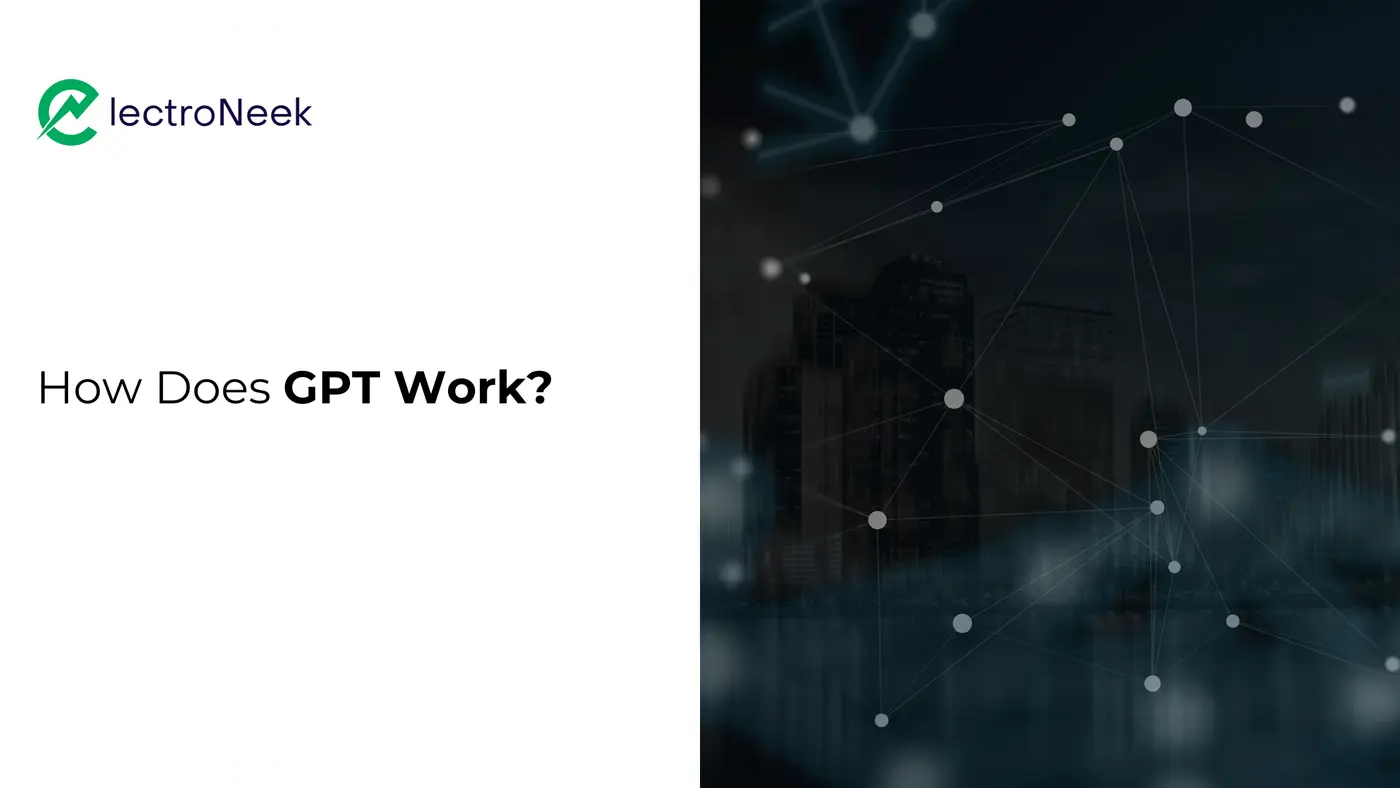
How Does GPT Work?
August 18, 2023 · 3 min read
Have you ever wondered how your smartphone predicts the next word you're about to type? Or how your favorite search engine magically completes your search query? The answer lies in Artificial Intelligence (AI) and a fascinating GPT technology. In this blog, we'll take a journey into the inner workings of GPT, demystifying its operations in a way that's easy to understand.
What is GPT and How Does It Work?
GPT, or Generative Pre-trained Transformer, is an AI language model designed to generate human-like text based on the input it receives. But how does it achieve this seemingly remarkable feat? Let's break it down step by step.
Pre-training: Learning from Text
Imagine is teaching a child language by exposing them to various books. GPT's pre-training phase is similar. It's fed enormous text data from books, articles, websites, and more. GPT learns language structure, grammar rules, and even some world knowledge during this phase. It begins to understand which words often follow others, the context in which certain words are used, and the overall flow of natural language.
Transformers: The Building Blocks
Transformers are the building blocks of GPT. They're like the individual components that make up the AI's brain. These transformers are designed to pay attention to different parts of the input text and use that attention to make predictions. In simpler terms, they help the AI understand the relationships between words and how they contribute to the meaning of a sentence.
Fine-tuning: Customizing for Specific Tasks
After pre-training comes fine-tuning, this is where GPT is tailored to perform specific tasks. Just as a versatile musician might specialize in playing jazz or rock, GPT can be fine-tuned to excel in various areas. Whether it's writing essays, translating languages, or even answering questions, fine-tuning allows GPT to adapt its general knowledge to specific applications.
Why Does GPT Work So Well?
The magic behind GPT's success lies in its scale and diversity. Training on a massive amount of text data gains exposure to countless sentence structures, writing styles, and subjects. This diversity allows GPT to understand and mimic human language more effectively.
Moreover, the attention mechanism within transformers enables GPT to capture the nuances of context, ensuring that its generated text is coherent and contextually relevant.
Attention to Details with GPT
While GPT is undeniably impressive, it's important to acknowledge its limitations. GPT generates text based on patterns learned from data, but it lacks true understanding and consciousness. It can inadvertently produce incorrect or biased information if the training data contains such flaws. Additionally, GPT might struggle with highly technical subjects or situations that require genuine human experience and emotion.
Final Thoughts
In a world where technology is evolving at an unprecedented pace, GPT stands as a testament to the wonders of AI. Its ability to generate human-like text is both awe-inspiring and thought-provoking.
As we continue integrating AI into our lives, embracing its potential while remaining mindful of its limitations is crucial. In this journey of exploration, if you're seeking a tangible application of AI that showcases its capabilities, consider ElectroNeek.
This innovative tool harnesses AI to automate tasks, streamline workflows, and enhance productivity.
By embracing AI in practical ways, we can truly appreciate its transformative power. As we move forward, let's continue to unlock the potential of AI to make our lives more efficient, insightful, and connected than ever before!