Article
Optical Character Recognition (OCR) vs. Intelligent Document Processing (IDP)
August 7, 2023 · 4 min read
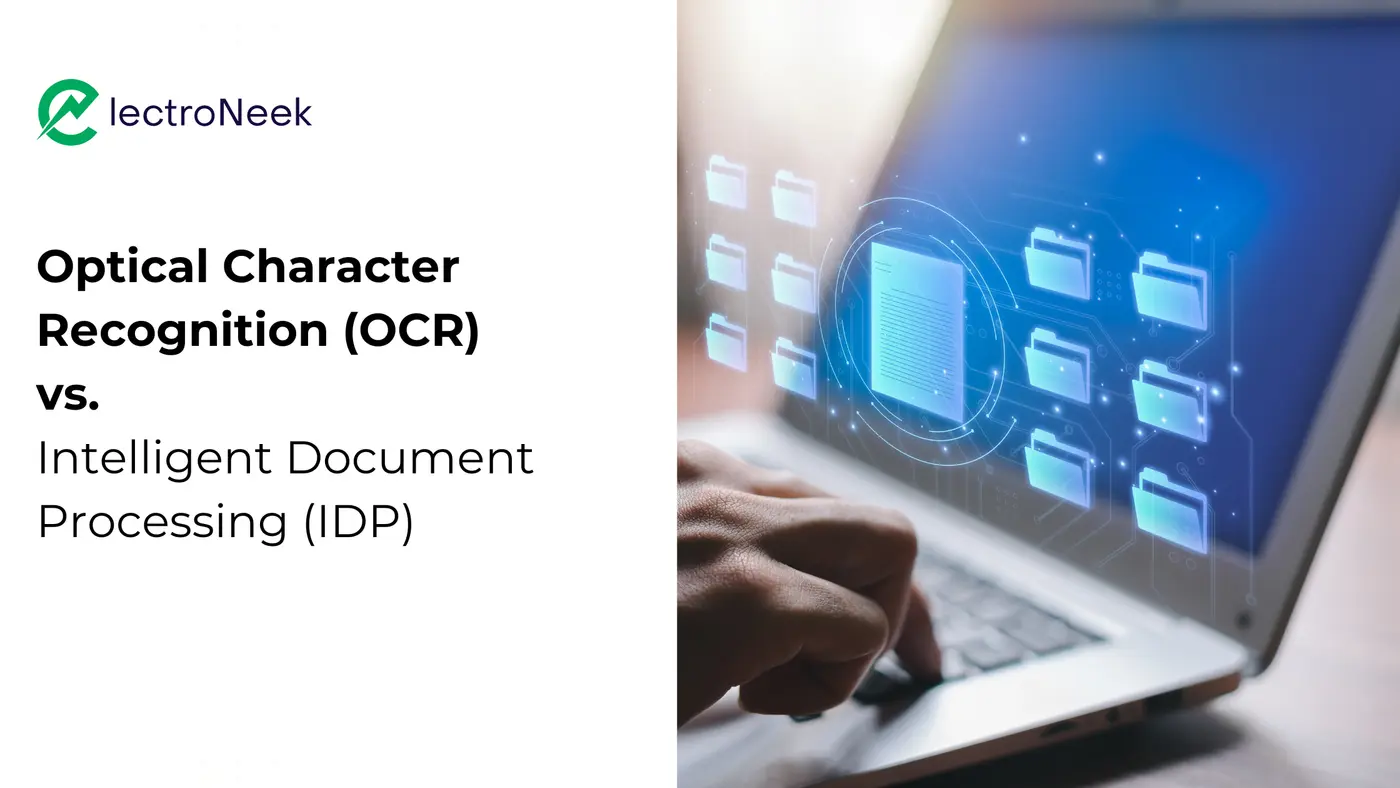
Have you ever wondered how businesses handle vast amounts of paperwork efficiently? In modern technology, two crucial technologies have emerged to streamline document processing: OCR (Optical Character Recognition) and IDP (Intelligent Document Processing). But what exactly are these technologies, and how do they differ? This blog will explore the key differences between OCR and IDP and their respective roles in the business landscape.
Understanding OCR (Optical Character Recognition)
Optical Character Recognition (OCR), is a technology designed to convert various documents, such as scanned paper documents, PDF files, or images taken by a digital camera, into editable and searchable data. It's like magic - OCR software enables computers to recognize text within images and convert it into machine-readable data.
This technology has been a game-changer for businesses looking to digitize and automate their document management processes.
How OCR Works:
- Image Preprocessing: OCR software begins by analyzing the document's image to enhance clarity and remove noise or distortions.
- Text Detection: It then identifies the regions containing text and segregates them from other graphical elements.
- Character Recognition: OCR algorithms analyze the individual characters within the text regions and convert them into digital characters.
- Output: Finally, the software produces a text-searchable document that can be edited and indexed.
Understanding IDP (Intelligent Document Processing)
Intelligent Document Processing (IDP), goes beyond OCR and takes document automation to the next level. IDP combines OCR with artificial intelligence (AI) and machine learning (ML) techniques to understand the context of the document and extract relevant information accurately.
Unlike traditional OCR, IDP can handle complex unstructured data and adapt to varying formats, making it a more versatile solution for businesses with diverse documents.
How IDP Works:
- Data Extraction: IDP software captures data from various document types, including invoices, purchase orders, receipts, and contracts.
- Contextual Understanding: Through AI and ML, IDP gains a contextual understanding of the documents, which helps in accurate data extraction.
- Validation and Verification: To ensure accuracy, the extracted data is then cross-validated with existing databases or other sources.
- Integration: IDP can seamlessly integrate with other business systems, making processing and utilizing the extracted data easier.
OCR vs. IDP - Key Differences
- Data Complexity: OCR primarily deals with structured data, such as text within clearly defined regions, like a typed document. On the other hand, IDP can handle semi-structured and unstructured data, which includes complex formats like invoices with varying layouts.
- Accuracy and Error Handling: While OCR provides impressive accuracy for structured data, it may encounter difficulties handling data from unstructured documents or those with poor image quality. IDPs intelligent algorithms can adapt to such challenges, leading to more accurate data extraction.
- Automation Capabilities: OCR alone is limited in its automation capabilities, mainly focusing on converting images to machine-readable text. IDP, however, enables end-to-end document processing automation, reducing manual intervention and streamlining workflows effectively.
Next Steps with Document Processing
OCR and IDP play pivotal roles in automating document processing but cater to different needs. OCR could be a suitable choice if your business deals with simple, structured data and needs basic document digitization.
However, IDP is the way to go if you're dealing with a vast amount of unstructured data and require sophisticated data extraction and contextual understanding.
ElectroNeek can be an excellent choice when considering Digital Document Processing solutions. ElectroNeek Intellidocs feature is equipped with intelligent document processing capabilities, offering a comprehensive set of benefits that go beyond automation and streamlining document processing.
We guarantee accuracy, reduce operating costs, facilitate regulatory compliance, and enhance the overall customer experience.
Moreover, IntelliDocs is equipped to automatically process a diverse array of document types spanning across major categories and languages. It excels particularly in handling PDF and image formats.
Here are some of the most popular document types it can effortlessly handle:
- Finance: Invoices, Remittance, Bank Cards, Receipts, Checks;
- Onboarding & KYC: Driver's Licenses from the United States, Driver's Licenses from Canada, International Driver's Licenses, IDs from the United States, International IDs;
- Insurance & Logistics: Nixie Labels, ACORD Forms, Shipping Containers;
- Healthcare: Summary of Benefits & Coverage, Covid-19 & Vaccine Cards, Bill of Lading;
- Travel: Passports, Travel Visas;
- Legal: Certificate of good standing, Power of Attorney
Remember, embracing modern document processing technologies like IDP can free up valuable time and resources, allowing your team to focus on strategic tasks that drive your business forward. So, why wait?
If you want to dive into the world of intelligent automation with ElectroNeek, check out these helpful resources:
-Read the ElectroNeek AI Manifesto to get a deeper understanding of our approach
-Catch up on our latest on-demand technical webinars and eBooks
-Schedule a free Discovery call to chat about your business needs and ROI.